Medical eye visit
Care for the health of your eyes
Some conditions that affect your eyes can change your sight over time. Our doctors diagnose and manage medical eye conditions, so you can protect your vision through the years.
Conditions we help manage
Diabetes
High blood sugar can affect the tiny blood vessels in the retina, the light-sensing layer at the back of your eye.
Macular degeneration
A condition that affects the macula, the part of the retina that gives you sharp, central vision.
Glaucoma
A group of conditions that damage the optic nerve, which carries images from your eye to your brain.
How we look closely at your eye health
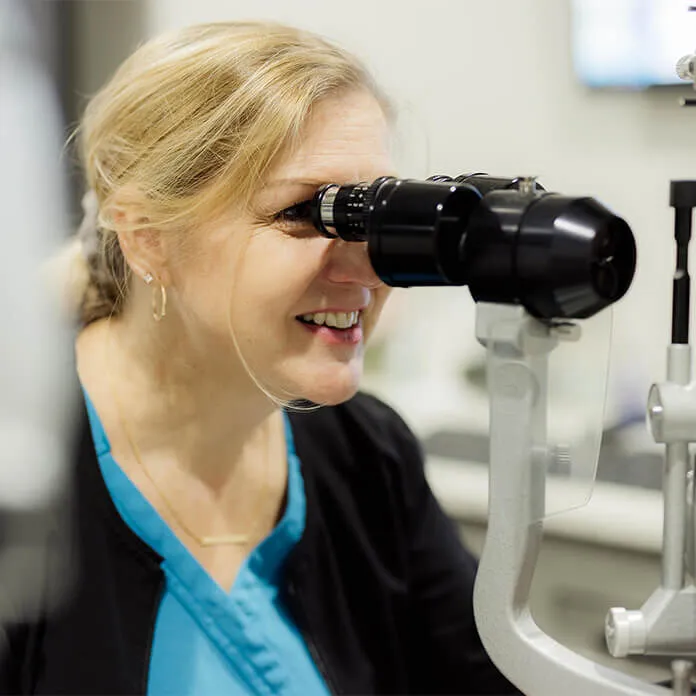
Our doctors combine detailed imaging with a careful microscope exam to diagnose and manage medical conditions of the eye.
Optomap widefield imaging shows the vessels and nerves at the back of your eye in great detail. Your images are saved, so your doctor can compare them year to year and watch for any changes.
Protecting your sight over time
Regular visits allow for early diagnosis and the best treatment of conditions that can threaten your sight. We’ll give you honest advice about what is best for your eyes and how to preserve your vision through the years.
Things to consider
Medical eye visits focus on the health of your eyes, not just how clearly you see. Whether you're managing an existing condition or experiencing new symptoms, a few things can help you prepare for your appointment.
Know your medical history. Conditions such as diabetes and high blood pressure can affect your eye health. Be prepared to share any medical conditions, medications, or changes in your health.
Pay attention to changes in your vision. Blurry or distorted vision, new floaters, flashes of light, or unusual eye discomfort are important to mention, even if the symptoms come and go.
Bring your current information. Have your medication list, current glasses or contact lenses, and insurance information available. Previous eye care records may also be helpful.
Understand your coverage. Medical eye visits may be billed differently from routine vision exams. Coverage depends on the reason for your visit and your insurance plan.
Regular monitoring can help us detect changes early and recommend appropriate care to protect your eye health over time.
Frequently asked questions
What are retinal photos, and why do I need them?
Retinal photos are detailed images of the back of your eyes, including the retina, blood vessels, and optic nerve. They help your eye doctor identify potential concerns, monitor existing conditions, and compare changes over time. These images provide valuable information about your eye health that may not be noticeable through vision changes alone.
What’s the difference between a routine eye exam and a medical eye visit?
A routine eye exam generally focuses on your vision, prescription needs, and overall eye health. A medical eye visit focuses on evaluating, diagnosing, or managing a specific eye condition or medical concern, such as glaucoma, diabetic eye disease, or macular degeneration.
Do I need a medical eye exam if I have diabetes?
Yes. Diabetes can affect the small blood vessels in your retina, sometimes before you notice changes in your vision. Regular comprehensive eye examinations are important for detecting diabetic eye disease early and monitoring your eye health. Most people with diabetes need an eye exam at least annually, although your doctor may recommend a different schedule.
Can glaucoma or macular degeneration develop without noticeable symptoms?
Yes. Some eye conditions, including glaucoma and certain forms of macular degeneration, can develop gradually without obvious symptoms in their early stages. Regular eye examinations and appropriate diagnostic testing can help identify changes before significant vision loss occurs.
Will my eyes need to be dilated during a medical eye visit?
Depending on your symptoms and the reason for your visit, your optometrist may recommend dilation to examine the internal structures of your eyes more thoroughly. Following dilation, your eyes may be more sensitive to light, and your vision may temporarily become blurry. We provide disposable tinted sunglasses to help with light sensitivity after your examination. For your safety, we strongly recommend arranging for someone to drive you home and avoiding driving until your vision has returned to normal.
Does medical insurance cover medical eye visits?
Medical eye visits may be covered by your health insurance when they involve the evaluation or management of a medical eye condition. Coverage, copays, deductibles, and referral requirements vary by plan. We recommend contacting your insurance provider or our office before your appointment to understand your benefits.
How often should I schedule a medical eye visit?
The frequency of your visits depends on your eye health, medical history, and any conditions being monitored. Some patients may need annual evaluations, while others benefit from more frequent follow-up appointments. Your eye doctor will recommend a schedule based on your individual needs.