
Comprehensive eye exam
A thorough look at your vision and eye health
Your vision is a gift, and your yearly eye exam is about more than a new prescription. It's a chance to check the health of your eyes and catch changes early, when they're easiest to treat.
We use gentle, accurate technology so your exam feels comfortable from start to finish.
Our vision philosophy
At Green Eye Associates, our doctors believe your vision is a gift. We want to give you excellent care and help you see clearly.
Every test in your exam is chosen to give us the best information about your eyes, as accurately and comfortably as possible. Automated technology makes measuring your eyes easier for you and helps us get more accurate results.
We know many patients dread certain eye tests, so we check eye pressure without the air puff. We also use high-resolution retinal photography to capture detailed images of the back of the eye, which may reduce the need for routine dilation in appropriate cases. Your optometrist will determine whether dilation is necessary based on your individual eye health and examination findings.
Why a yearly exam matters
Routine eye exams every year allow for early diagnosis and the best treatment of conditions that can threaten your sight. With Optomap imaging, your doctor can compare images of your retina from one year to the next and notice small changes over time.
It’s our joy to care for you and your family, and to be part of your journey to clearer vision.
What to expect
Measuring your prescription
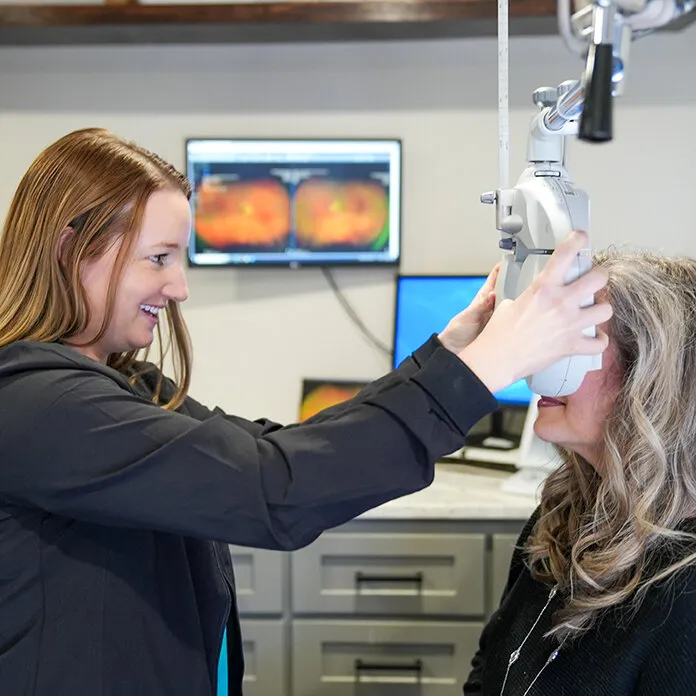
We use a Marco Digital Refraction System to measure your vision and prescription accurately.
Checking eye pressure
Our iCare tonometer checks the pressure inside your eye with no air puff and no eye drops.
Imaging the back of your eye
Optomap widefield imaging gives a detailed view of your retina, often without dilating drops. Your images are saved and compared from year to year.
A close look with the microscope
Your doctor examines your eyes with a microscope for a thorough check of your eye health.
Honest advice
We talk through your results and share what is best for your eyesight and how to protect it over time.
Personalized eyewear & contact lens guidance
After your eye exam, you'll have the opportunity to work one-on-one with a trained contact lens specialist or optician to explore personalized solutions for your new prescription. Our team offers a wide selection of contact lenses, frames and lenses from leading manufacturers and brands. We also cut and edge eligible eyeglass lenses in our on-site optical lab using advanced equipment, allowing us to provide personalized service and attention to detail.
Frequently asked questions
What can I expect from an appointment at Green Eye Associates?
You can expect honesty, excellence and caring service. We use gentle, modern technology to find your clearest prescription and check the health of your eyes.
If your primary care doctor needs a report, for example for diabetic eye care, we typically send it within a few days so your care stays connected.
How often should I get my eyes examined?
For most people, once a year is best. Your doctor may recommend a different schedule based on your needs.
Why is it important to get my eyes checked?
Regular exams keep your prescription up to date so you see clearly. Your eyes change as you age, so even if you've never needed glasses or contacts, you may benefit from them now.
An eye exam can also show early signs of conditions like diabetes, high blood pressure and high cholesterol.
What are retinal photos, and why do I need them?
Retinal photos are detailed images of the back of your eyes, including the retina, blood vessels, and optic nerve. They help your eye doctor identify potential concerns, monitor existing conditions, and compare changes over time. These images provide valuable information about your eye health that may not be noticeable through vision changes alone.
Will my eyes be dilated during the exam?
Not always. High-resolution retinal photography gives your optometrist a detailed view of the back of your eye, which may reduce the need for routine dilation in appropriate cases. Your optometrist will recommend dilation when your eye health or exam findings call for it.
Why do my eyes feel tired after a long day on the computer?
Screen time can make your eyes work harder and feel strained. Tired eyes can also come from an outdated glasses prescription, dry eye or other issues that affect focusing. Your doctor will check for each of these and help you make a plan.