
Dry eye treatment
Personalized care for dry, irritated eyes
Dry, gritty eyes don't have to be your normal. Let's find out what's behind them.
Whether your eyes feel irritated by afternoon or contact lenses have become hard to wear, we start by understanding the cause of your symptoms. From there, your optometrist builds a plan that may include simple at-home care, prescription treatments or advanced in-office treatment with Envision.
Understanding dry eye disease
Your tears do more than keep your eyes wet. A healthy tear film is made of water, oil and mucus that work together to protect the surface of your eyes and keep your vision clear.
Dry eye disease happens when your eyes don't make enough tears, or when tears evaporate too quickly. It's common, it can be ongoing, and it often has more than one cause. Common symptoms include:
Irritated, gritty, burning or itchy eyes
Your eyes may feel scratchy, or as if something is in them.
Discomfort when blinking
Blinking may feel uncomfortable instead of soothing.
Watery or red eyes
Excess watering and redness can be signs of dry eye.
Stringy mucus
You may notice stringy mucus in or near your eyes.
Blurry or changing vision
Your vision may seem blurry or change throughout the day, especially when reading, driving or using screens.
Trouble wearing contacts
Your contact lenses become uncomfortable before the end of a normal day.
What causes dry eye?
Dry eye often has more than one cause. Common contributing factors include:
- Meibomian gland dysfunction (MGD). The tiny oil glands along your eyelids can become blocked or inflamed. Without enough oil, tears evaporate too quickly. MGD is one of the most common causes of dry eye.
- Aging and hormonal changes. Tear production can change with age and with hormonal shifts.
- Screen time. People tend to blink less while focusing on screens, which lets tears evaporate.
- Your environment. Wind, dry air, heating and air conditioning can all dry the eyes.
- Medications and health conditions. Some medications and conditions, such as rosacea and certain autoimmune conditions, can affect your tears.
- Contact lens wear. Contacts can make dry eye symptoms more noticeable.
How we evaluate dry eye
Because dry eye has many possible causes, care starts with a careful evaluation. Your optometrist will ask about your symptoms, health and daily routine, and examine your eyes, eyelids and tear film to understand what’s behind your discomfort. Allergies and other conditions can feel similar to dry eye, so getting the cause right helps us recommend the right care.
First steps you can take
Dry eye care often begins with simple, less invasive approaches, depending on your condition:
- Adding tears. Mild dry eye can often be managed with over-the-counter lubricating eye drops, used as often as needed. We recommend preservative-free drops, which have fewer additives that can irritate your eyes.
- Warm compresses and lid care. Warm compresses, gentle lid massage and eyelid cleansers can help loosen thickened oil and calm the eyelids.
- Helping your eyes make more tears. We can prescribe eye drops that help your eyes make more tears. An omega-3 supplement may also help.
- Calming inflammation. We may recommend prescription drops or ointments to reduce inflammation around the surface of your eyes.
If you’ve tried these steps and still have dry eyes, trouble wearing contact lenses, or rely on artificial tears to get through the day, advanced in-office treatment may help.

Advanced dry eye treatment with Envision
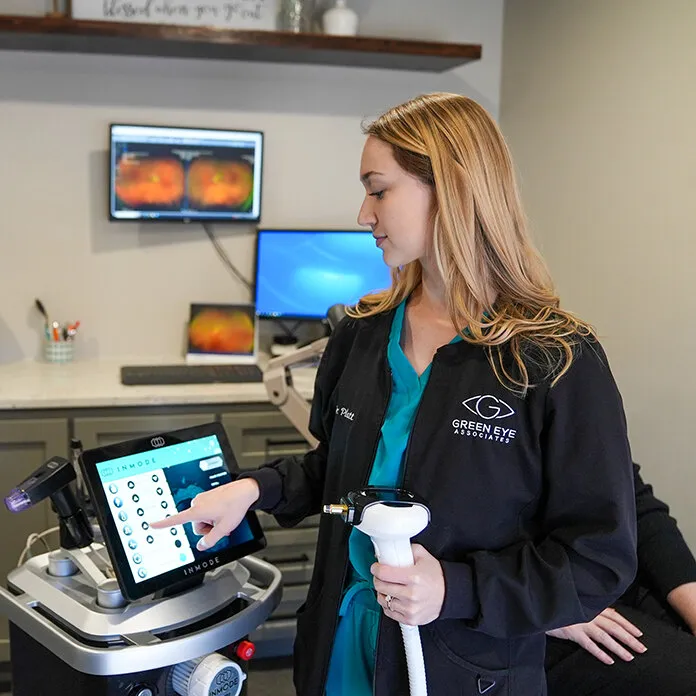
When first steps aren't enough, Green Eye Associates offers Envision by InMode, an in-office treatment platform with two complementary technologies: intense pulsed light (IPL) and radiofrequency (RF). Both are used to treat a common cause of dry eye: oil glands in the eyelids that are blocked or inflamed, known as meibomian gland dysfunction (MGD).
IPL and radiofrequency may be recommended together as part of a comprehensive treatment approach. Depending on your symptoms, clinical findings and individual circumstances, your optometrist may also recommend either one on its own.
Lumecca-I · Intense pulsed light (IPL)
Lumecca-I uses gentle pulses of light on the skin around the eyes. It targets factors that can contribute to dry eye, such as inflammation along the eyelids and small, irritated blood vessels, like those seen with rosacea. It may also help reduce bacteria and Demodex (tiny mites that can live along the eyelashes) that can make dry eye worse.

Forma-I · Radiofrequency (RF)
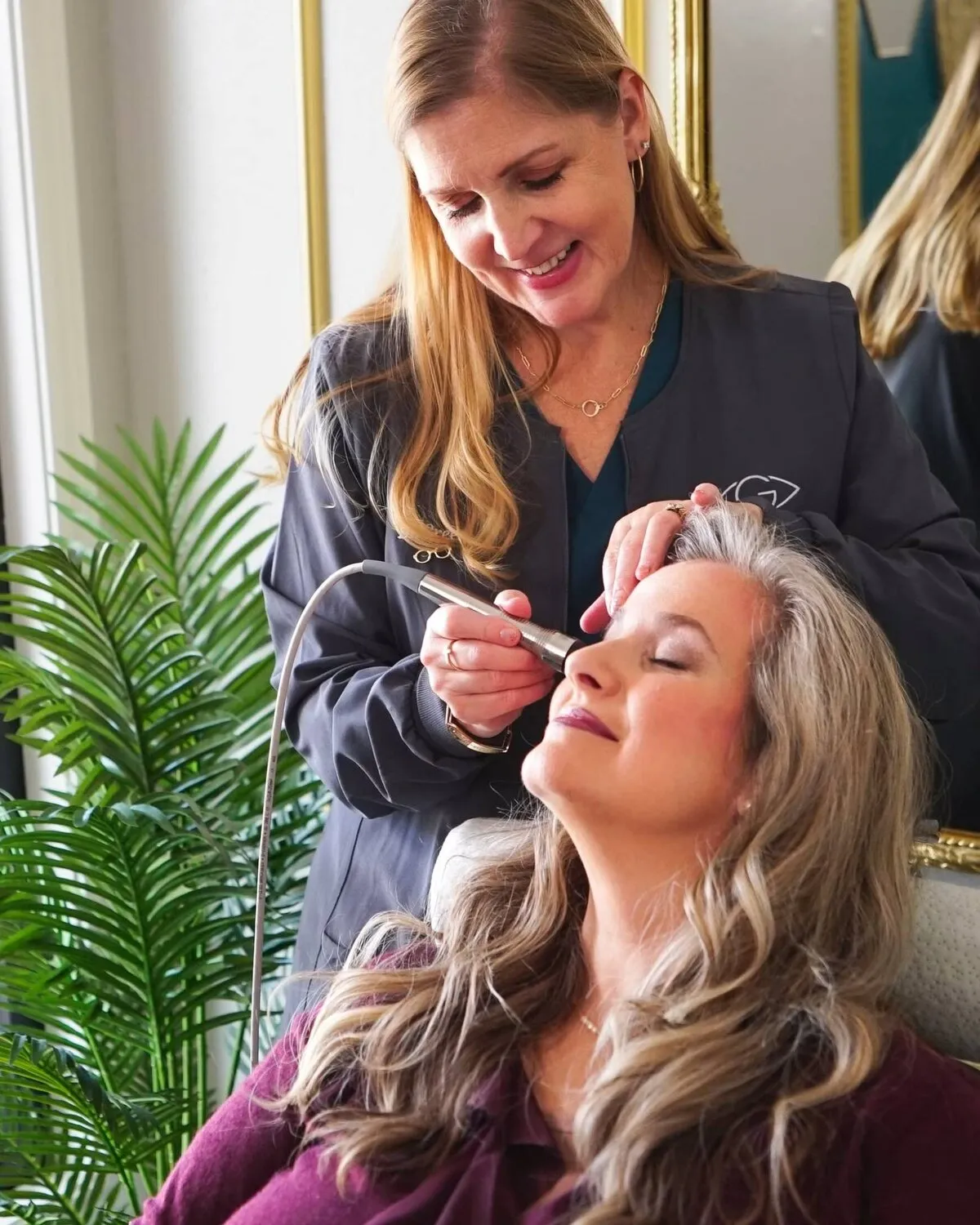
Forma-I delivers controlled thermal energy, a gentle, steady warmth, to the eyelid area. That warmth helps soften the thick, trapped oil in blocked meibomian glands so it can flow more freely, supporting a more stable tear film. It's used particularly for dry eye associated with meibomian gland dysfunction.
A plan built around you
No single treatment is right for every patient. Your optometrist considers the type and severity of your dry eye, what's causing it, your eye health, your skin and your medical history before recommending a treatment plan. Your plan may combine at-home care, prescription treatments and in-office treatment, and it can change as your eyes respond.
What to expect
A dry eye evaluation
Your optometrist looks closely at your eyes, eyelids and tear film to find out what's behind your symptoms.
Your personalized plan
We talk through the options that fit your needs. If in-office treatment is recommended, we'll explain how many sessions may be suggested and the cost before you begin.
Comfortable in-office sessions
Envision sessions typically take 15 to 40 minutes in our office. Most people feel a gentle warmth and can return to their day with little to no downtime.
Follow-up and adjustments
Dry eye care is often ongoing. Some patients feel more comfortable soon after treatment, while for others improvement builds over several weeks. We'll check in on how your eyes are doing and adjust your plan as needed.
Things to consider
Results vary from person to person. Envision doesn't treat every cause of dry eye, and it isn't the right fit for every patient. Your optometrist will let you know whether it suits your needs and how it works alongside the rest of your dry eye care.
Dry eye FAQs
What causes dry eyes?
Dry eyes occur when your eyes don't produce enough tears or when tears evaporate too quickly. Common contributing factors include aging, hormonal changes, certain medications, prolonged screen use, environmental conditions, and underlying health conditions.
What are the common symptoms of dry eye?
Dry eye symptoms can include burning, stinging, redness, blurry or fluctuating vision, sensitivity to light, and a gritty sensation, as though something is in your eye. Some people also experience excessive watering as their eyes respond to irritation.
Can dry eyes cause blurry vision?
Yes. Your tear film helps maintain a smooth surface for clear vision. When it becomes unstable, your vision may appear blurry or fluctuate throughout the day, particularly when reading, using digital devices, or driving.
Can screen time make dry eyes worse?
Yes. People tend to blink less frequently when focusing on digital screens, which can increase tear evaporation and dryness. Taking regular screen breaks, blinking intentionally, and adjusting your workspace may help reduce discomfort.
Is dry eye a permanent condition?
Dry eye is often a chronic condition, but symptoms can frequently be managed with appropriate care. Treatment depends on the underlying cause and severity of your symptoms. Your eye doctor can recommend a personalized approach to help improve comfort and protect your eye health.
Are over-the-counter eye drops enough to treat dry eyes?
Artificial tears may provide temporary relief for mild symptoms, but they don't always address the underlying cause. If you frequently rely on eye drops or continue experiencing discomfort, a comprehensive evaluation can help determine whether additional treatment is needed.
When should I see an eye doctor for dry eyes?
If you regularly experience dryness, irritation, redness, or fluctuating vision, it's a good idea to schedule an eye exam. Persistent symptoms may indicate an underlying issue that requires more than temporary relief. Sudden vision loss or severe eye pain requires urgent medical attention.
What treatment options are available for dry eye?
Treatment depends on what's causing your dry eye. Many people start with simple steps such as preservative-free lubricating drops, warm compresses and eyelid care. Your optometrist may also recommend prescription eye drops or ointments. When symptoms continue, in-office treatment with Envision, which uses intense pulsed light (IPL) and radiofrequency, may be an option.
How will my optometrist determine the right treatment?
Your optometrist starts with a dry eye evaluation, looking closely at your eyes, eyelids and tear film and asking about your symptoms, health and daily habits. Your treatment recommendations are based on the type and severity of your dry eye, its likely causes, your eye health and your medical history, and your plan can be adjusted over time.
What is Envision?
Envision by InMode is an in-office treatment platform for certain types of dry eye, particularly dry eye associated with meibomian gland dysfunction (MGD), when the oil glands in the eyelids are blocked or inflamed. It includes two technologies: Lumecca-I, which uses intense pulsed light (IPL), and Forma-I, which uses radiofrequency (RF).
What is the difference between IPL and radiofrequency?
Intense pulsed light (IPL) uses gentle pulses of light on the skin around the eyes to target factors such as inflammation and small, irritated blood vessels that can contribute to dry eye. Radiofrequency (RF) uses controlled warmth to help soften the thickened oil in blocked meibomian glands so it can flow more freely.
Can IPL and radiofrequency be combined?
Yes. IPL and radiofrequency are often recommended together as part of a comprehensive treatment approach, because they address different contributing factors. Depending on your symptoms, clinical findings and individual circumstances, your optometrist may also recommend either one on its own.
Is Envision right for everyone with dry eye?
Not necessarily. Envision may be helpful for patients whose dry eye is associated with meibomian gland dysfunction, but it isn't appropriate for every type of dry eye or every patient. Your optometrist will consider your symptoms, eye health, skin characteristics, medical history and other factors to determine whether it's a suitable option for you.
Is Envision treatment painful?
Most patients describe treatment as a mild warming sensation or a quick snap against the skin. Some temporary redness or sensitivity may occur afterward. Your optometrist will explain what to expect and take appropriate precautions to keep you comfortable.
Is there any downtime after Envision treatment?
Most patients can return to their normal daily activities shortly after treatment. Temporary skin redness, warmth or sensitivity may occur. Your optometrist will explain any aftercare instructions, including sun protection and skincare precautions.
How many Envision treatments will I need?
Envision treatment typically involves a series of sessions rather than a single visit. The number and frequency of sessions depend on your symptoms, the severity of your condition and your optometrist's recommendations. Maintenance treatments may also be suggested to help manage symptoms over time.
How soon will I notice results?
Some patients notice improvement after their first sessions, while others experience more gradual changes over their treatment series. Results vary depending on the underlying cause and severity of dry eye. Treatment is intended to help manage symptoms rather than provide a guaranteed permanent cure.
Find relief for your dry eyes
We'd love to help you find out what's behind your symptoms. Call us at 254-752-0471, book a dry eye visit online, or email dryeye@greeneyeassociates.com.